Make it work for your project

Tell us the message, where it will go, and any size or quantity you have in mind. You can send a photo, sketch, or reference with your inquiry.

We help with materials, design, and edits, then ship your approved sign across the United States. We do not provide on-site installation.

Our target is an estimate within one hour and dispatch 2–3 business days after final design approval. Your quote confirms the schedule; shipping transit time is additional.

See how the sign concierge works.

Making a video-surveillance notice clear

A surveillance notice should tell people what the property wants to communicate at the point where they encounter it. Start with the approved wording and the entrance or area it belongs to. We can help organize that information into a readable sign or decal.

Choose the format around the surface

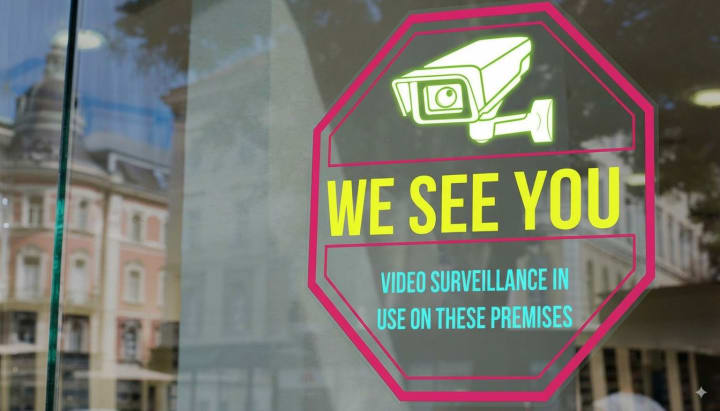
A glass entrance may suit a window decal; an opaque door, fence, or existing sign support may call for a separate panel. A transparent graphic can leave clear space around the message, while an opaque background makes the notice visually independent of what is behind it.

For a glass notice, specify the application side and the reading side. Take a photo from the visitor’s position and record the usable dimensions. Include handles, existing opening hours, frames, and any neighboring notices so the new design has a clear place.

Price depends on the chosen format, size, quantity, artwork variants, and finishing. Request the cost for each notice type and confirm what it includes: printed graphic or panel, material treatment, preparation, and any mounting components.

Use wording that reflects actual practices

Provide the exact statement you want displayed and have it approved by the person responsible for the property. Identify whether a site name, contact, or additional instruction belongs with it. A camera symbol may support the message, but it should not be the only information a visitor has to interpret.

Avoid adding claims such as continuous monitoring, audio recording, a security-company affiliation, or a guaranteed response unless they accurately describe the site.

Give one message priority

Decide whether the notice stands alone or sits beside an access restriction. A camera message, no-entry instruction, opening hours, and a logo all need space; combining them into one small graphic can make the important detail harder to find.

Mark the proposed footprint with paper and view it from the approach. Tell us which line should be noticed first and the reading distance. Final size should follow the approved text and available space.

Keep multiple locations coordinated

For a building with several entrances, list each location, quantity, size, and application or mounting method. Separate notices that have different contacts or wording. Name the locations consistently in photographs and proof feedback. Review the final text and placement plan before production; we ship the finished graphics and you arrange application or mounting.

Can the notice match our existing business signs?

Send the logo, colors, and a photo of the existing signage. We can discuss a consistent layout while giving the notice enough contrast and space to remain readable.

Does a camera notice need to be a metal sign?

The right format depends on the surface and exposure. Share the location and mounting plan so a panel or suitable decal can be considered. The quote identifies the chosen construction and any included finishing.

Compare and plan