Make it work for your project

Tell us the message, where it will go, and any size or quantity you have in mind. You can send a photo, sketch, or reference with your inquiry.

We help with materials, design, and edits, then ship your approved sign across the United States. We do not provide on-site installation.

Our target is an estimate within one hour and dispatch 2–3 business days after final design approval. Your quote confirms the schedule; shipping transit time is additional.

See how the sign concierge works.

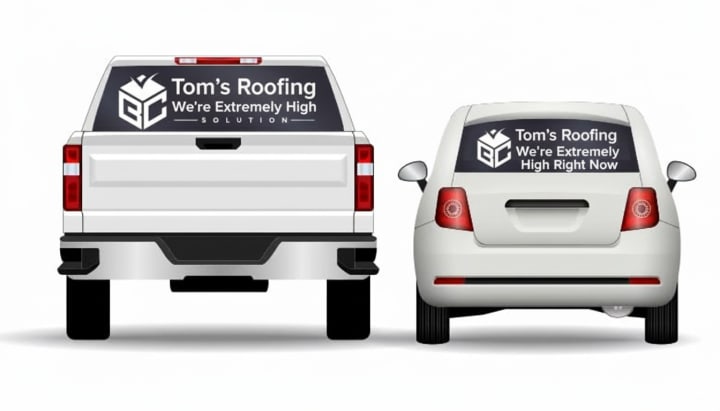
Choosing and sizing car window decals

Vehicle glass is a specific application, not just another place to stick a logo. Start with the exact window, the message, and the usable area. A small identification graphic and a large rear-window design need different planning and material choices.

Compare small graphics and perforated film

Cut lettering or a compact printed decal can keep a message concentrated in one area. For a larger rear-window graphic, one format to discuss is 7 mil perforated vinyl with a 60/40 pattern: printed material occupies about 60 percent and openings about 40 percent. This format is designed for outside application.

Perforations do not establish suitability for every vehicle or placement. Tell us how the window is used and have the proposed location checked before approving a full-window design. Do not treat a product photograph as a fit or visibility guarantee.

The graphic area, material, trimming plan, and number of vehicle-specific layouts shape the price. Request a quote by vehicle or design version, with the supplied print dimensions and any preparation or finishing clearly identified.

Measure the actual window

Supply the vehicle year, make, and model, then measure the particular glass. Note whether it has a sliding section, curved edges, rear wiper, brake light, existing tint, or other features. A vehicle model name alone is not a measured template.

For a graphic trimmed to the window, identify the glass dimensions separately from the supplied print dimensions. Let the production and application plan establish any trimming allowance. Keep important wording away from edges and divisions that could interrupt it.

Choose the information people should remember

A useful starting brief is a business name, a short service description, and one contact route. Decide which of those comes first rather than giving everything equal emphasis. A parked vehicle near an entrance may support different detail from one normally seen in traffic.

Send a photograph of the complete vehicle so the window graphic can be considered alongside body graphics. If several vehicles are involved, list each version and its measurements instead of assuming one layout fits the whole fleet.

Plan application and delivery together

Tell us who will apply the graphic and whether you need it before a scheduled vehicle appointment. We make and ship the approved piece; we do not apply it to the vehicle. Include the destination ZIP code and needed arrival date so the quote can address production and transit separately.

Can I use the same file on two different vehicles?

The branding can stay consistent, but the layout may need adjustment. Send measurements and photographs for both windows so important information is not cropped or placed over an obstruction.

Should I choose a window decal or a vehicle magnet?

A window decal uses an adhesive graphic on suitable glass. A magnet needs a suitable magnetic body panel. Describe whether you want the branding to remain in place or be removable between uses.

Compare and plan