Make it work for your project

Tell us the message, where it will go, and any size or quantity you have in mind. You can send a photo, sketch, or reference with your inquiry.

We help with materials, design, and edits, then ship your approved sign across the United States. We do not provide on-site installation.

Our target is an estimate within one hour and dispatch 2–3 business days after final design approval. Your quote confirms the schedule; shipping transit time is additional.

See how the sign concierge works.

Plan a 4th of July banner people can read

Start with the banner's job: welcome parade spectators, identify a neighborhood celebration, or announce a holiday sale. Those are different messages. Give one of them the largest space, then use the remaining room for the host, location, or date that helps someone act on it.

Compare vinyl, mesh, and the available space

Common banner constructions include 13 oz vinyl, heavier 18 oz vinyl, and 8 oz mesh. Mesh has openings that allow air through; solid vinyl gives the artwork a continuous background. Treat wind exposure as part of the display plan rather than assuming a heavier sheet solves every outdoor problem.

Typical planning sizes include 2 × 4 feet, 3 × 6 feet, and 4 × 8 feet. Mark the proposed outline with tape before choosing. A long fence panel and a narrow porch rail need different proportions, even when both carry the same message.

Choose the hanging arrangement before the artwork

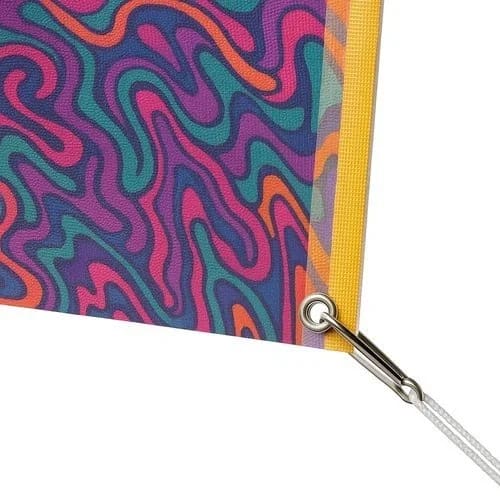
Grommets provide attachment points, hems reinforce the edges, and pole pockets form sleeves for a pole or display support. Specify which edges need which finish. Keep dates, sponsor names, and decorative stars away from those areas. A sketch showing the support and the banner together is more useful than a banner measurement alone.

Make the holiday design work at a distance

Use red, white, and blue deliberately: a busy flag background can compete with a short headline. Reserve a quiet area behind the important words. For a parade, test the message at the expected viewing distance. For a sale, make the offer and end date easy to separate. Leave off the year if the same design will be used again.

Know what affects the estimate

Finished area, material, edge treatment, quantity, and artwork preparation shape the project estimate. Include any separate sponsor versions in the count. Send the event date as a required arrival date, together with the destination ZIP code; a dispatch date is only one part of the schedule. Your quote confirms the production specification and timing.

Can the banner be reused next July?

Plan reusable wording from the start: a recurring event name works better than a specific weekday or year. Let the banner dry before storing it, and avoid putting a fold through important lettering. The material and display conditions determine how well it holds up.

Should one banner carry every event detail?

Usually the main banner works better as a clear welcome or announcement. Put parking directions, schedules, or booth information on separate signs close to the decision they support.

Compare and plan